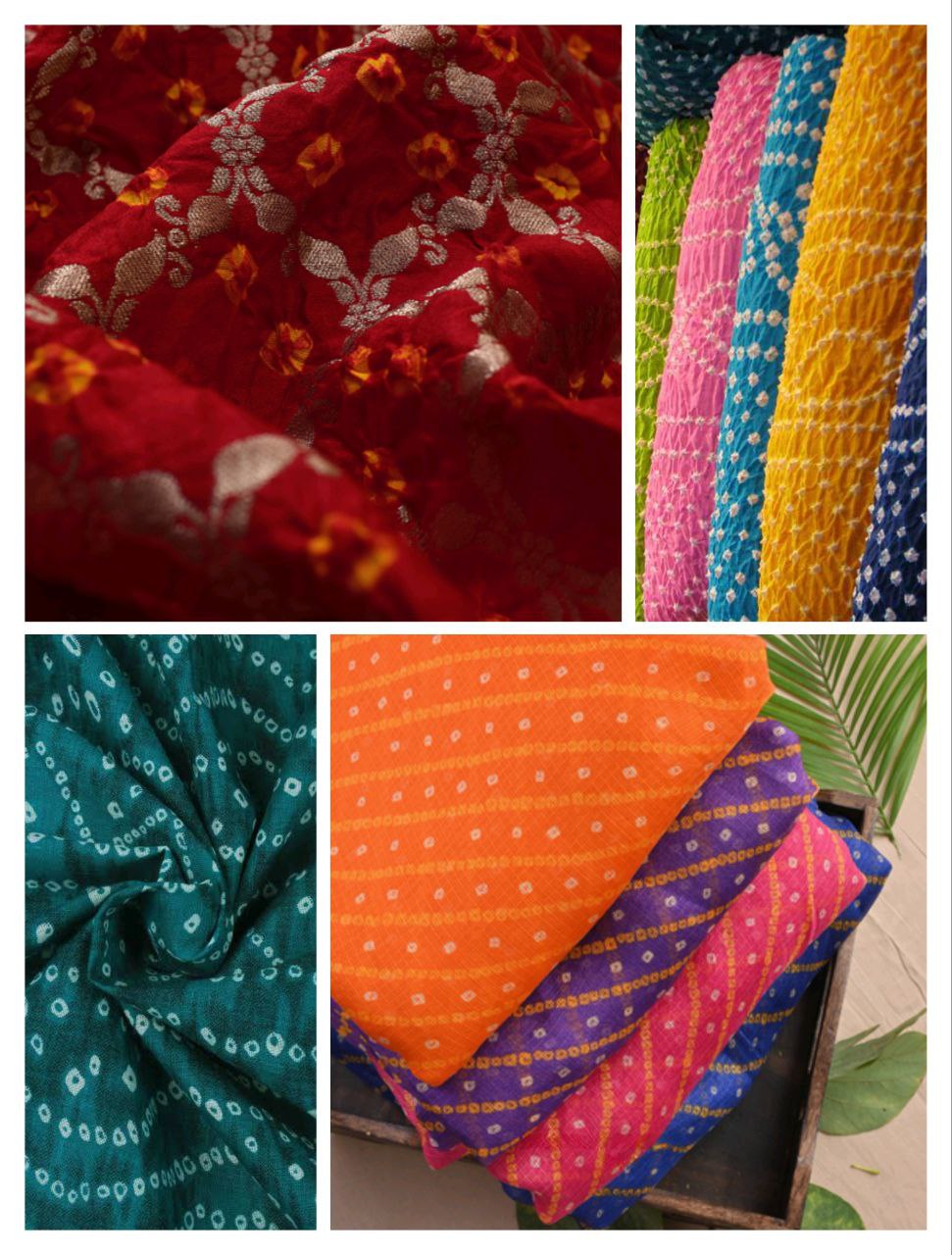
The term bandhani is derived from the Sanskrit verbal root bandh ("to bind, to tie").Bandhani is a type of tie-dye textile decorated by plucking the cloth with the fingernails into many tiny bindings that form a figurative design. Today, most Bandhani making centers are situated in Gujarat, Rajasthan, Sindh, Punjab region and in Tamil Nadu where it is known as Sungudi. It is known as chunri in Pakistan. Earliest evidence of Bandhani dates back to Indus Valley civilization where dyeing was done as early as 4000 B.C. The earliest example of the most pervasive type of Bandhani dots can be seen in the 6th century paintings depicting the life of Buddha found on the wall of Cave at Ajanta. Bandhani is also known as Bandhej Saree, Bandhni, Piliya, and Chungidi in Tamil and regional dialects. Other tying techniques include Mothra, Ekdali and Shikari depending on the manner in which the cloth is tied. The final products are known with various names including Khombi, Ghar Chola, Patori and Chandrokhani.
Earliest evidence of Bandhani dates back to Indus Valley civilization suggest that dyeing was done as early as 4000 B.C. The ancient city of Mohenjo-daro have traces of Bandhani art. The earliest example of the most pervasive type of Bandhani dots can be seen in the 6th century paintings depicting the life of Buddha found on the wall of Cave at Ajanta. This art finds its mentions in the Alexander the great time texts about the beautiful printed cottons of India. As per evidences in Historical Texts, the first Bandhani saree was worn at the time of Bana Bhatt's Harshacharita in a royal marriage. It was believed that wearing a Bandhani saree can bring good future to a bride. Ajanta walls stand for the evidences of these Bandhani sarees. The dyers have experimented with the use of different elements both natural and man-made for ages. Also, there are experiments with different binding/tying techniques to create patterns on cloth immersed in containers of dye. Different types of tie and dyes have been practiced in India.