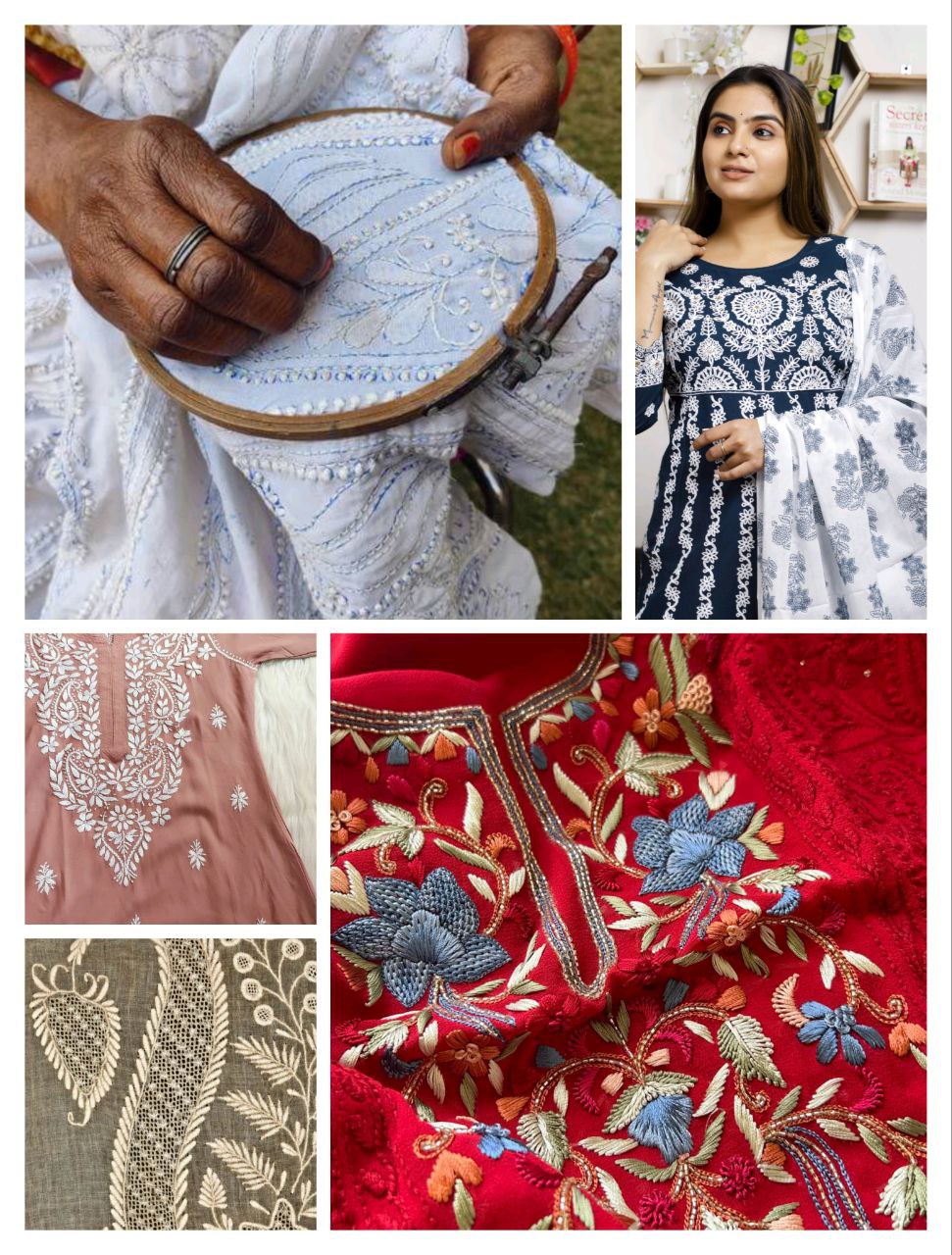
Chikankari (Urdu: چِکن کاری, Hindi: चिकन की कढ़ाई, चिकनकारी) is a traditional embroidery style from Lucknow, India. Translated, the word means embroidery (using thread or wire), and it is one of Lucknow's best known textile decoration styles. The main market in Lucknow for Chikankari based products is Chowk. Production is mainly based in Lucknow and in the adjoining districts.
The technique of chikan embroidery is known as chikankari (चिकनकारी چکن کاری). Chikankari is a delicate and artfully done hand embroidery on a variety of textile fabrics like cotton, chanderi, muslin, georgette, viscose, silk, organza, net, etc. White thread is embroidered on cool, pastel shades of light muslin and cotton garments. Nowadays chikan embroidery is also done with colored and silk threads in colors to meet the fashion trends and keep chikankari up-to-date. Lucknow is the heart of the chikankari industry today and the variety is known as Lucknawi chikan. Chikan work in recent times has adopted additional embellishments like Mukaish, Kamdani, Badla, sequin, bead, and mirror work, which gives it a rich look. Chikan embroidery is mostly done on fabrics like cotton, semi-Georgette, pure Georgette, crepe, chiffon, silk, and any other fabric which is light and which highlights the embroidery. The fabric cannot be too thick or hard, else the embroidery needle won't pierce it. Also, sheer fabric allows the part of the stitches on the reverse of the fabric to give a shadow effect, which is characteristic of the technique.
The patterns and effects created depend on the stitches and the thicknesses of the threads used. Some of the stitches include backstitch, chain stitch and hemstitch. The result is an open work pattern, jali (lace) or shadow-work. Often the embroiderer creates mesh-like sections by using a needle to separate threads in the ground fabric, and then working around the spaces. It consists of 32 stitches.