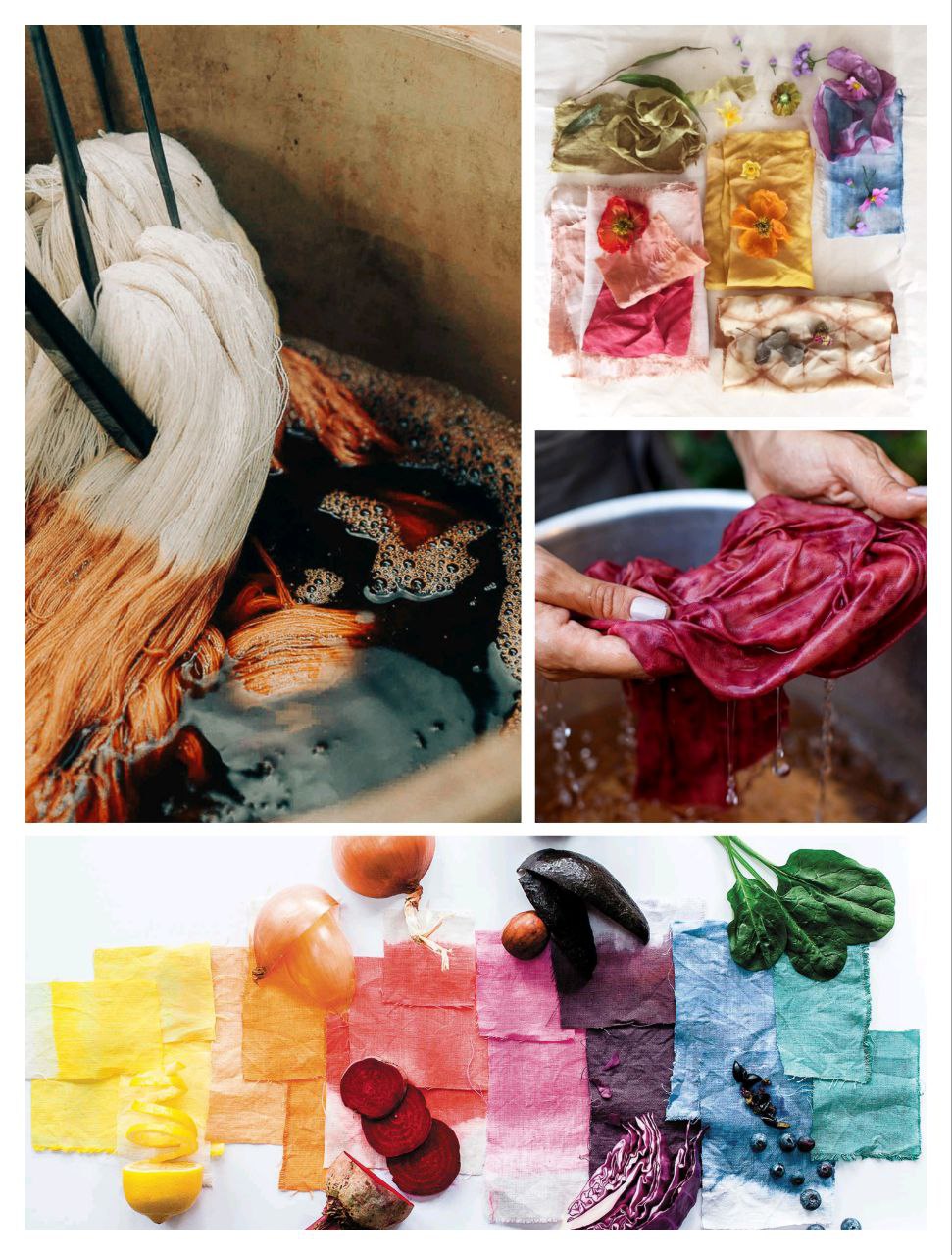
Natural dyes are dyes or colorants derived from plants, invertebrates, or minerals. The majority of natural dyes are vegetable dyes from plant sources—roots, berries, bark, leaves, and wood—and other biological sources such as fungi.After mordanting, the essential process of dyeing requires soaking the material containing the dye (the dyestuff) in water, adding the textile to be dyed to the resulting solution (the dyebath), and bringing the solution to a simmer for an extended period, often measured in days or even weeks, stirring occasionally until the color has evenly transferred to the textiles. Some dyestuffs, such as indigo and lichens, will give good color when used alone; these dyes are called direct dyes or substantive dyes. The majority of plant dyes, however, also require the use of a mordant, a chemical used to "fix" the color in the textile fibres. These dyes are called adjective dyes or "mordant dyes". By using different mordants, dyers can often obtain a variety of colors and shades from the same dye, as many mordants not only fix the natural dye compounds to the fibre, but can also modify the final dye color. Fibres or cloth may be pretreated with mordants (pre-mordant), or the mordant may be incorporated in the dyebath (meta-mordant, or co-mordant), or the mordanting may be done after dyeing (post-mordant).