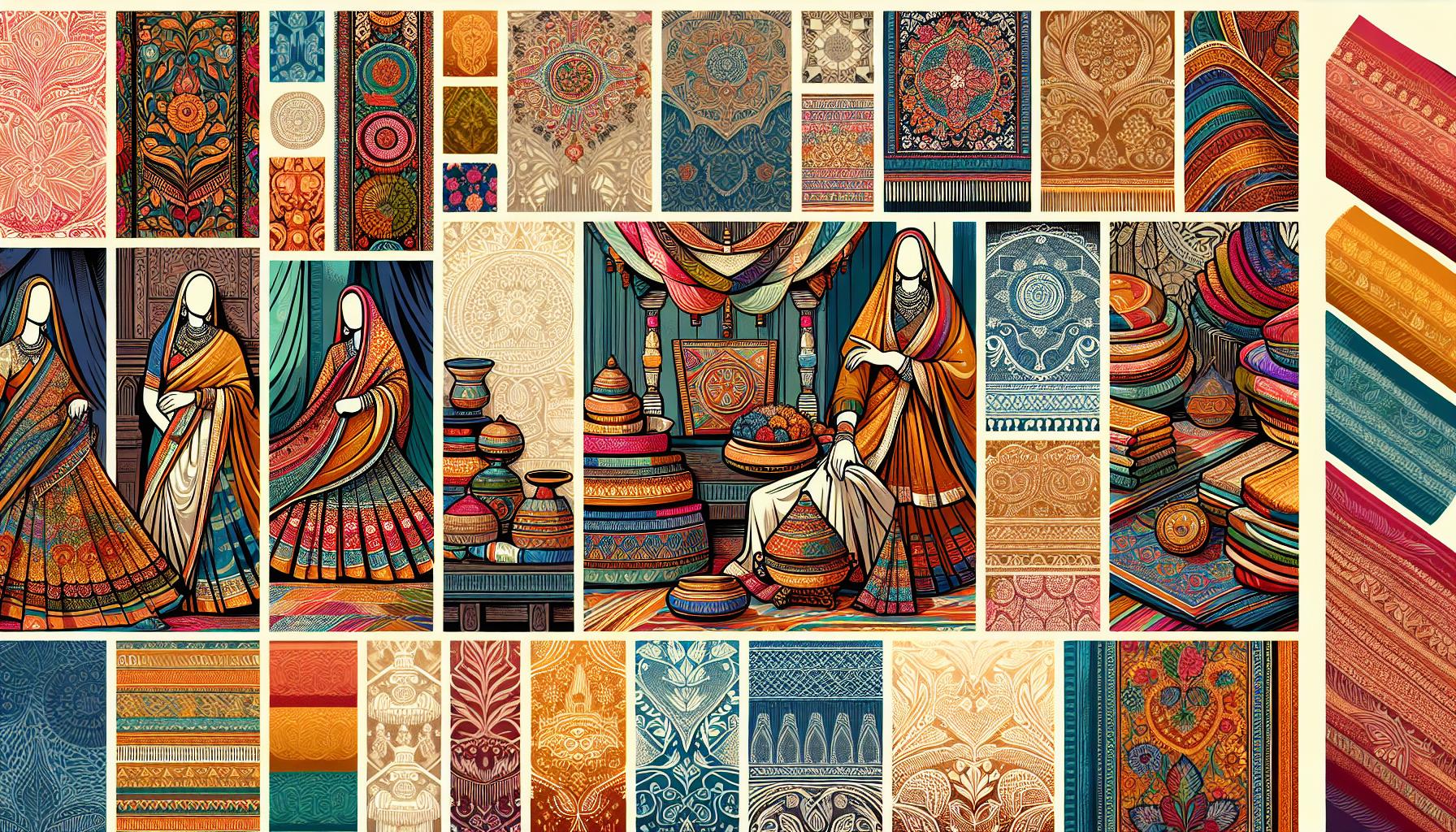
India’s history is deeply intertwined with the art of textiles, reflecting the diverse and vibrant cultural tapestry of the nation. From the ancient Indus Valley Civilization to the present day, Indian textiles have played a crucial role in trade, tradition, and technology. This blog delves into the fascinating journey of textiles in India, highlighting key periods, innovations, and regional specialities that have shaped this rich legacy.
The story of Indian textiles begins with the Indus Valley Civilization, which thrived around 2500 BCE. Archaeological findings, including spindle whorls and fragments of woven fabrics, indicate that the people of this ancient civilisation were skilled in spinning and weaving. They primarily used natural fibres such as cotton, which grew abundantly in the region. The discovery of dyed cotton threads suggests an early mastery of textile dyeing techniques. As Indian society evolved, so did its textile traditions. During the Vedic period (1500-500 BCE), weaving became more sophisticated, and references to textiles appeared in ancient scriptures and epics like the Rigveda and Mahabharata. These texts mention various types of garments and the use of precious materials like silk and wool.
The classical period, marked by the rise of the Maurya (321-185 BCE) and Gupta (320-550 CE) empires, saw significant advancements in textile production. This era witnessed the development of complex weaving techniques and the introduction of new materials. Indian textiles, especially cotton and silk, were highly prized commodities along trade routes, including the famous Silk Road.Indian weavers became renowned for their skills, creating intricate patterns and designs that were exported to distant lands. The Roman historian Pliny the Elder wrote about the high demand for Indian textiles in the Roman Empire, where they were considered luxurious and exotic.
In recent decades, Indian textiles have experienced a renaissance, both domestically and internationally. Contemporary designers draw inspiration from traditional fabrics, incorporating them into modern fashion. Indian textiles like Khadi, Banarasi silk, and Pashmina have gained global recognition for their quality and craftsmanship.Innovation continues to drive the industry, with a growing emphasis on sustainable and eco-friendly production methods. Designers and manufacturers are exploring organic fibres, natural dyes, and ethical labour practices, aligning with global trends toward sustainability.
Textiles hold immense cultural significance in India, playing a vital role in religious ceremonies, festivals, and everyday life. Traditional garments, such as saris, turbans, and dhotis, are deeply rooted in Indian culture and vary widely across regions.Textiles also carry symbolic meanings, with specific patterns, colours, and materials representing different aspects of life. For instance, white is often associated with purity and mourning, while red symbolises fertility and marriage.
The history of textiles in India is a testament to the nation’s creativity, resilience, and cultural diversity. From ancient times to the modern era, Indian textiles have evolved, influenced by various cultures and technological advancements. Today, they continue to captivate the world with their beauty and craftsmanship.Preserving and promoting traditional textile arts is crucial in the face of modern challenges. By supporting local artisans and embracing sustainable practices, we can ensure that India’s rich textile heritage is for future generations to appreciate and celebrate.