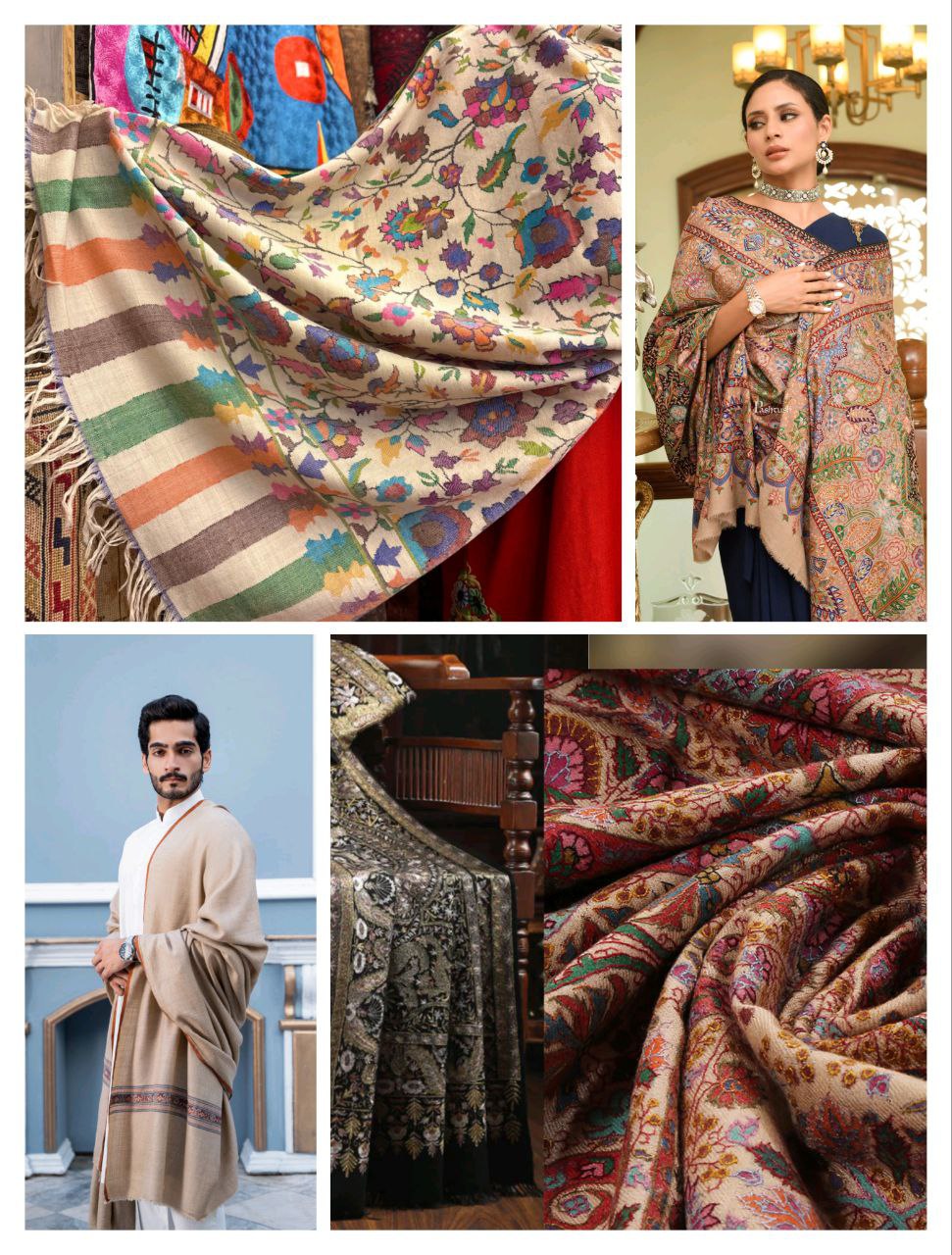
Pashmina (/pæʃˈmiːnə, pɑːʃ-/, also UK: /pʌʃ-/) refers to, depending on the source, the cashmere wool of the Changthangi cashmere goat, fine Kashmiri cashmere wool, or any cashmere wool. The word pashm means "wool" in Persian, but in Kashmir, pashm referred to the raw unspun wool of domesticated Changthangi goats. In common parlance today, pashmina may refer either to the material or to the variant of the Kashmir shawl that is made from it. Both cashmere and pashmina come from the same goat but typical cashmere ranges from 12 to 21 microns in diameter, whereas pashmina can also refer to a cashmere and silk blend (70% / 30%) that has a typical fiber range from 12 to 16 microns.
Samples of wool fibres recovered from corroded copper artifacts from Harappa dating back to the Indus Valley Civilisation are believed to be Pashmina and Shahtoosh. The material gained prominence through its use in the Kashmir shawl. In Mughal times, this was used as an indicator of rank and nobility. In 1526, Babur (1483–1530) founded the Mughal Empire in India, and established the practice of giving khalat or "robes of honor", typically made of expensive fabric, to members of their durbar to indicate high service, great achievement, or royal favor. In his time, the Mughal khalat was a set of clothes, which could include a turban, long coat, gown, fitted jacket, sash, shawl, trousers, shirt, and scarf. One or all of these could be made of pashmina and embroidered in gold cloth. In 1568, Kashmir was conquered by Babur's grandson Akbar. In Akbar's time, a pair of pashmina shawls was an expected part of khil'at ceremonies. From the 16th to the early 20th centuries, the Safavid, Zand, and Qajar emperors of Iran also wore pashmina and gifted Kashmir shawls as khilat within their political and religious practices.